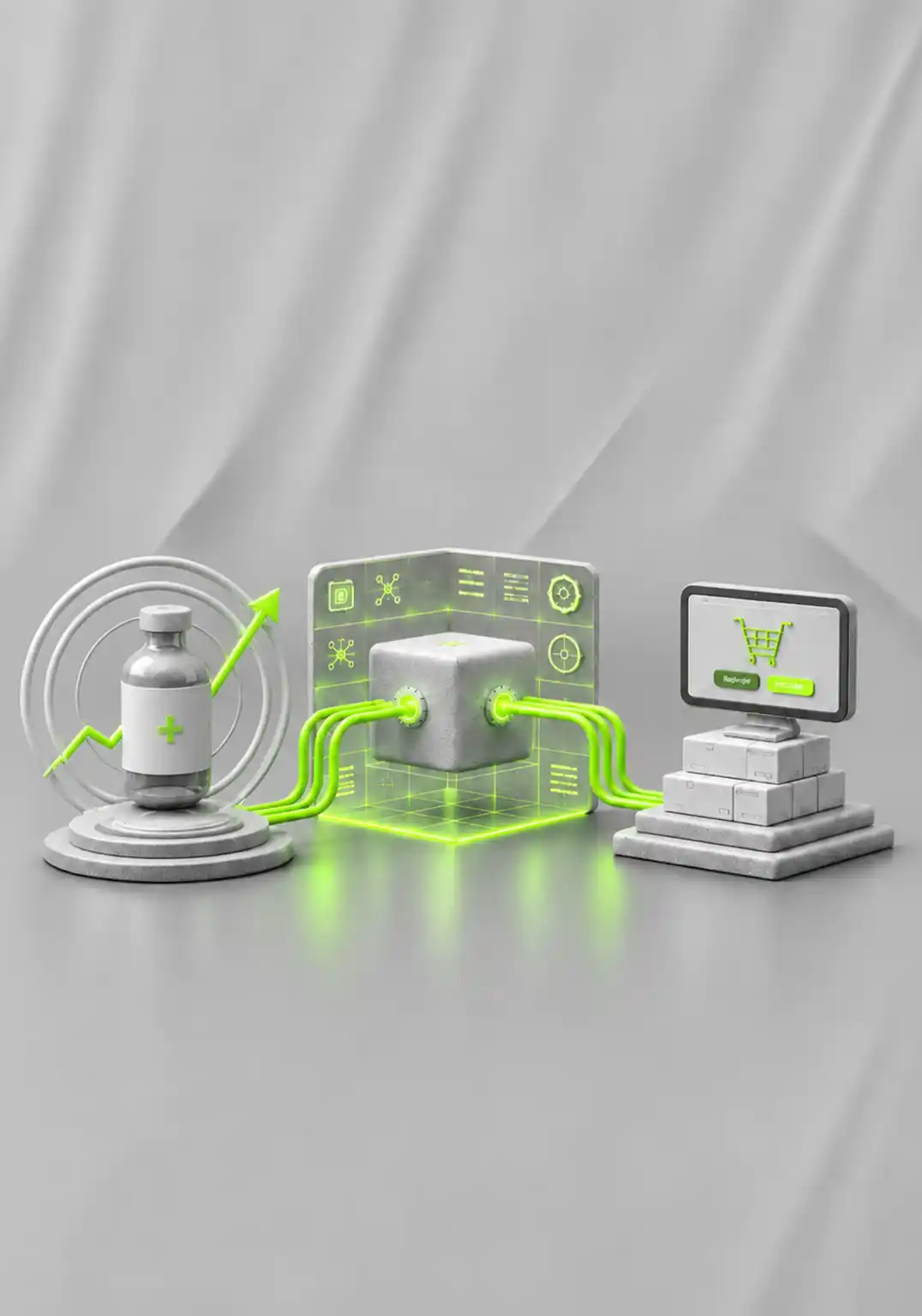
The challenge for pharmaceutical brands is not simply getting products listed online. It is navigating the restrictions that govern how those products are marketed, sold and accessed by consumers. Product classification, licensing requirements, advertising restrictions and customer data regulations all influence the online buying journey. Without a strategy that accounts for these factors, digital visibility may generate interest but fail to translate into sustainable business growth.
Pharma D2C Agency Services bring together market strategy, digital content, ecommerce technology and performance measurement to address these challenges. For pharmaceutical businesses, this means building a D2C model around the product category, applicable regulatory requirements and permitted sales channels before investing in customer acquisition.
This is how Pharma D2C Agency Services in Thane can help pharma brands develop a more structured approach to compliant digital commerce and sustainable growth.
What Do Pharma D2C Agency Services Actually Cover?
Pharma D2C is not one standard ecommerce model. The approach depends on what a brand sells, who can purchase it and which channels are legally appropriate.
Pharma direct-to-consumer marketing can include product education, brand discovery, customer engagement and digital commerce planning. However, direct-to-consumer pharmaceutical sales must account for product classification, prescription requirements, licensing and applicable advertising restrictions.
At Fresh Box Media, we approach this as a connected business system rather than a collection of isolated campaigns. The key areas include:
Brand positioning and content: Communicating product information clearly, with suitable review of health-related claims and promotional content.
Website and ecommerce experience: Organising product information, navigation, enquiry or purchase journeys and mobile usability.
SEO and product discovery: Connecting relevant search intent with accurate product pages, category content and useful information.
Performance marketing: Planning campaigns around permitted products, suitable audiences and measurable business objectives.
Customer engagement: Structuring consent-based communication, customer support and repeat-purchase journeys where appropriate.
Analytics and optimisation: Understanding where visitors drop off and which channels contribute to qualified demand.
Each activity should support the same commercial objective without overlooking the requirements of the product being marketed.
Why Does Product Classification Matter Before Marketing?
A pharma D2C strategy must begin with product eligibility, not an advertising budget. Different categories require different communication and transaction approaches.
Product category | Digital strategy consideration |
Permitted OTC products and wellness categories | Product education, discoverability and eligible ecommerce journeys, subject to applicable rules |
Schedule H, H1 and X medicines | Prescription-related requirements, licensed sale channels and strict advertising restrictions |
Other regulated healthcare products | Product-specific claims, approvals, labelling and applicable category regulations |
India’s Drugs and Cosmetics Rules restrict advertisements for Schedule H, H1 and X medicines without prior Central Government sanction. The Drugs and Magic Remedies (Objectionable Advertisements) Act, 1954 also restricts specified drug advertisements and claims.
There is an additional development businesses should monitor. In September 2026, the Ministry of Health proposed extending certain prescription-drug advertising restrictions to retail and wholesale licence holders. This is a draft proposal, not a final amendment, and businesses should verify its status before making compliance decisions.
The practical takeaway: a marketing plan should never assume that every product can follow the same online promotion or selling route.
How We Approach Pharmaceutical Digital Commerce
Effective pharmaceutical online sales optimisation requires more than improving website traffic. We connect the commercial, operational and communication elements that influence the customer journey.
Map the product portfolio
We begin by understanding the product categories, intended audiences, applicable restrictions and permitted sales channels. This helps determine which products can support direct ecommerce and which require a different route.
Define the customer journey
A consumer researching a wellness product may need accessible product information, while a caregiver looking for a prescription medicine may need guidance towards an appropriate licensed channel. These journeys should not be treated as interchangeable.
Build the digital commerce foundation
Product pages, navigation, mobile experience, search functionality, payment journeys and customer support should work together. For brands with multiple product lines, catalogue structure and accurate product information are equally important.
Connect discovery with acquisition
SEO, relevant content, social media and permitted paid campaigns can help audiences discover a brand. We assess these channels according to the product category and the type of demand the business wants to generate. This makes pharma brand customer acquisition more meaningful than simply increasing clicks.
Plan customer data responsibly
Enquiry forms, subscriptions, analytics and CRM systems should collect only relevant information and communicate how it will be used. India’s Digital Personal Data Protection Rules, 2025 provide for phased implementation, so businesses should track the applicable commencement dates and prepare their data practices accordingly.
Measure commercial performance
We look beyond impressions and website visits. Product-page engagement, qualified enquiries, conversion rates, acquisition costs, repeat orders and revenue contribution can offer a clearer view of performance, depending on the permitted sales model.
What Can a Pharma D2C Growth Strategy Look Like?
Consider a hypothetical OTC digestive wellness manufacturer based in Thane planning to expand its online presence. Instead of immediately investing in broad advertising, the business could first organise its product catalogue, improve product information, build relevant search visibility and establish an eligible ecommerce journey.
It could then evaluate which channels bring relevant visitors, where customers leave the purchase journey and whether post-purchase communication supports retention. This is an example of how pharmaceutical digital commerce solutions connect product discovery with business operations.
For larger manufacturers managing multiple brands, distributors and product categories, a pharma D2C growth strategy for enterprises also needs coordination across marketing, technology, sales, compliance and fulfilment teams.
How Should You Measure and Choose the Right Agency?
A useful measurement framework separates three types of outcomes:
- Visibility: Organic impressions, search clicks, product-page visits and relevant reach.
- Engagement: Product information interactions, enquiry completion and customer response.
- Business performance: Qualified demand, conversion rate, customer acquisition cost, repeat purchases and revenue contribution.
When evaluating an agency, ask how it will handle product classification, content review, ecommerce integration, customer data, campaign reporting and coordination with your internal teams. Also clarify who owns the website, product catalogue, analytics accounts and customer data.
At Fresh Box Media, we bring brand strategy, content, technology and commerce together to support connected digital experiences. Our approach is relevant when a pharma business needs more than campaign execution and requires its digital touchpoints to work towards a defined business objective.
Frequently Asked Questions
1. What are Pharma D2C Agency Services?
Pharma D2C Agency Services cover the strategy, content, technology and digital marketing activities that help pharmaceutical brands build appropriate direct-to-consumer discovery, engagement and commerce journeys.
2. Can all pharmaceutical products be sold directly to consumers online?
No. The route depends on product classification, prescription requirements, licensing and applicable regulations. Businesses should obtain product-specific regulatory and legal guidance before enabling online sales.
3. How can pharma brands improve customer acquisition?
They can improve relevant product discovery through SEO, clear product information, suitable digital campaigns and a well-structured website. The approach must reflect the product category and applicable advertising restrictions.
4. What should enterprises look for in a pharma D2C agency?
Look for an agency that understands the relationship between brand strategy, product communication, ecommerce technology, customer data, acquisition channels and business reporting. Clear ownership and accountability should also be established.